

Description
Driving Lesson Diagrams – Enhancing Learning Through Visuals
Driving lesson diagrams are invaluable tools that help learners grasp essential driving concepts with clarity and confidence. By translating complex road scenarios into simple, visual formats, these diagrams make it easier to understand layouts, manoeuvres, and routines—whether during practical lessons, theory preparation, or independent study.
These clear, easy to use diagrams DO NOT include lesson objectives or explanations of the correct procedures etc.
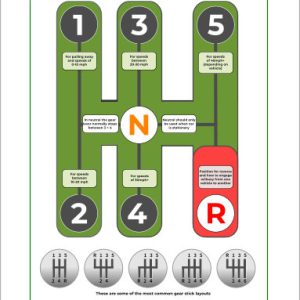
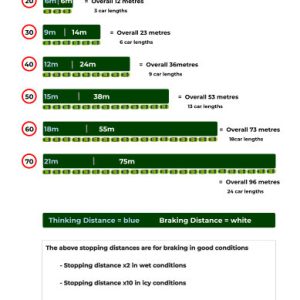
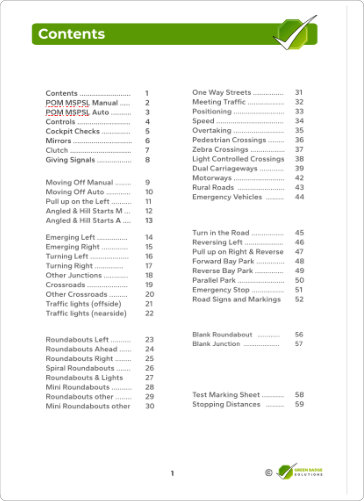
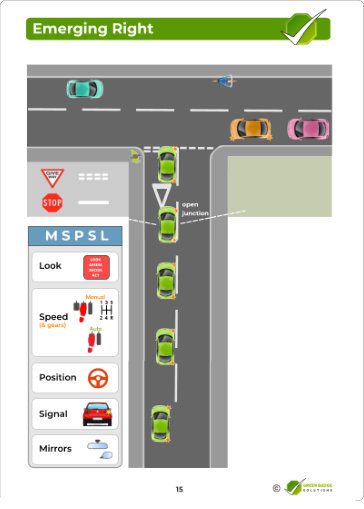
Typical diagrams include junction layouts, roundabout navigation, lane positioning, mirror routines, and step-by-step guides for manoeuvres like parallel parking and bay parking. These visuals demonstrate correct vehicle placement, signalling, and observation points, giving pupils a clear picture of what to do before they practise in the car.
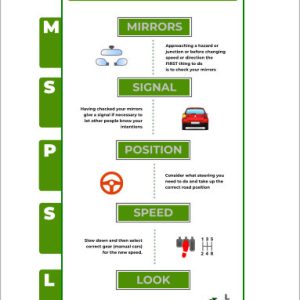
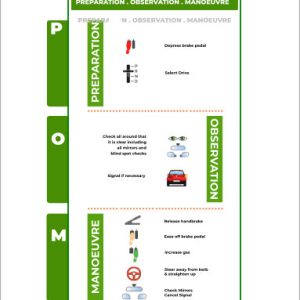
Instructors frequently use diagrams to reinforce spoken instruction, especially when teaching structured routines such as MSPSL (Mirror, Signal, Position, Speed, Look) or POM (Prepare, Observe, Move). For instance, a T-junction diagram can show where to stop, where to look, and how to approach safely—making abstract rules more tangible.
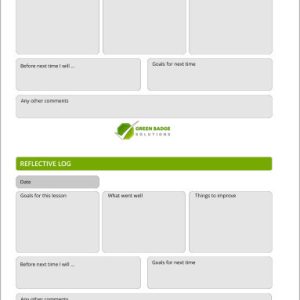
Diagrams also support reflective learning. Pupils can revisit them after lessons to consolidate understanding and monitor progress. When combined with written notes or progress logs, they form a complete learning toolkit.
Whether in print or digital format, driving lesson diagrams boost retention, reduce anxiety, and build confidence. They transform theory into practice—making every lesson more engaging and effective.