Description
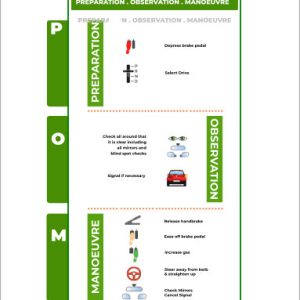
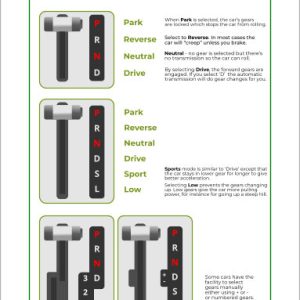
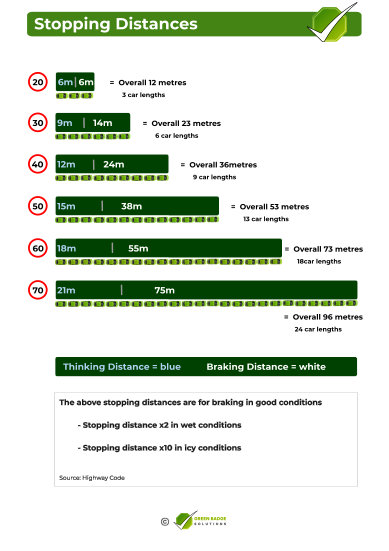
An invaluable handout tool for driving instructors. This pdf template can be printed off numerous times to give to your pupils, or you can just keep it amongst your materials to refer to on your driving lessons. Alternatively just keep the download on your tablet to refer to on lessons. Uses information taken direct from the Highway Code.
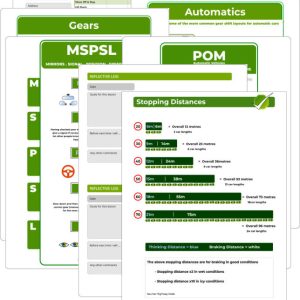
Car stopping distances refer to the total distance a vehicle travels from the moment a driver spots a hazard to when the car comes to a complete stop. This distance is made up of two key components: thinking distance and braking distance.
- Thinking distance is how far the car travels while the driver reacts to a situation. It’s influenced by factors like driver alertness, fatigue, alcohol, and speed. For example, at 30 mph, the thinking distance is typically around 9 metres.
- Braking distance is the distance the car travels once the brakes are applied. It depends on road conditions, tyre grip, brake quality, and vehicle weight. At 30 mph, braking distance is roughly 14 metres on a dry road.
As speed increases, stopping distances grow exponentially.
Understanding stopping distances is vital for safe driving. It’s why the UK Highway Code includes a stopping distance chart, often memorised by learner drivers. Keeping a safe following distance and adjusting for weather or road conditions helps prevent collisions and ensures safer journeys. Use our stopping distances chart/graphic to help equip your learners.